
I. School: General Information and Academic Administration
Updated: May 24
The first time I stepped into this place, I already felt welcomed, at home, and safe.

April 7, 2026—this was the day when we, the Filipino pre-service teachers, were sent to our respective practicum schools in Indonesia to attend a brief orientation, as well as to discuss our teaching internship activities, schedules, and set-ups. This was done with the presence of the Universitas Halu Oleo (UHO) SEA Teacher coordinator, Teacher Training and Education Faculty vice deans, as well as of the involved teachers and higher-ups from the partnered integrated school and senior high schools within Kendari, Southeast Sulawesi, Indonesia.
My assigned school was Lazuardi Ibnu Sina Kendari, which was the second out of three practicum schools that we visited. While talking with the institution’s principals, vice principals, and teachers about our teaching internship activities, I discovered something unexpected. I learned that the school only has one junior high school grade level, namely Grade 7, because this academic year was the first time that they had junior high school students. Indeed, it is quite different from what I expected, but just imagine being the first ever exchange student to teach junior high school learners in Lazuardi Ibnu Sina Kendari. I believe that is quite unique, amazing, and historic!
I learned a lot of interesting and commendable facts, practices, and approaches to education about this school and its people during my entire practice teaching activities: observation, teaching assistantship, full teaching demonstration, and final evaluation. Specifically, my engagements and experiences as a Filipino SEA teacher in Lazuardi Ibnu Sina Kendari widened my perspective and appreciation in following aspects:
inclusive and learner-centered education
educational integration of technology
students’ holistic development
celebration of learners’ improvements and achievements
positive teacher-student relationships
cultural pride and identity
Indeed, my teaching experiences there did not only enhance my skills in communication, lesson planning, delivering mathematics instructions, and conducting assessments despite cultural differences and language barriers. It also greatly influenced my teaching and learning perception, which strengthened my eagerness to practice and promote inclusive, adaptive, as well as student-, teacher-, and culture-friendly educational practices.
School Profile
From a place I knew nothing about, it slowly became a home filled with meaningful facts and unforgettable moments.

Located in Kendari, Southeast Sulawesi Indonesia, Lazuardi Ibnu Sina Kendari is an integrated school, which operates under the Lazuardi Hayati Foundation. This private school promotes inclusive, supportive, compassionate, and world-oriented education. Originally known as Lazuardi Global Islamic School Ibnu Sina Kendari, it was changed into Lazuardi Global Compassionate School Ibnu Sina Kendari in 2018 to highlight its aim of shaping learners with virtue, compassion, and spiritual well-being.
Besides that, this school is also committed to providing quality pre-kindergarten, kindergarten, elementary, and junior high school education. Interestingly, this is the first year that it has offered junior high school education, and that simply explains why it has only accepted Grade 7 students as of this academic year.
What makes the school even more interesting is its philosophy, which focuses on multiple intelligences, peer learning, creative confidence through hands-on and brain-based activities, limitless learning environment, and cooperative community of parents, teachers, and stakeholders. This means that this institution aims to align its teaching methods with meaningful and student-centered instruction.
Now, let’s take a closer look at the English-translated vision, mission, and goal of Lazuardi Ibnu Sina Kendari as a Global Compassionate School (GCS).
Vision: “A noble cultured society based on virtue, compassion, and spiritual happiness.”
Mission: “Unlocking and developing every individual’s potential in creating improvements in life.”
Goal: “Producing students who have noble character and are prosperous both physically (clothing, food, shelter), mentally, and spiritually, have a life goal and mission to help others to achieve happiness in this world and in the hereafter.”
Clearly, this partner school is not only focused on its students' academic performance. With a vision of building a society of good, compassionate, and spiritually healthy individuals, it strives to help its learners discover and develop their skills and potential to improve their lives. Additionally, it aims to produce holistically healthy students with not only good character but also with a dedication to helping others achieve happiness.
Did you also know that this is not the first time that Lazuardi Ibnu Sina Kendari has accepted international exchange students for the SEA Teacher Program?
I can still remember some teachers and students sharing that they have previously had a Filipino SEA teacher from one of the earlier batches. As an active partner school and recipient of pre-service teachers such as from the Philippines and Thailand, it is impressive to know that this school has already provided international teaching experiences and supported educational and cross-cultural exchange among such pre-service teachers. Huge thanks to its community of school leaders, teachers, students, and even therapists, who generally have strong English communication and collaboration skills.
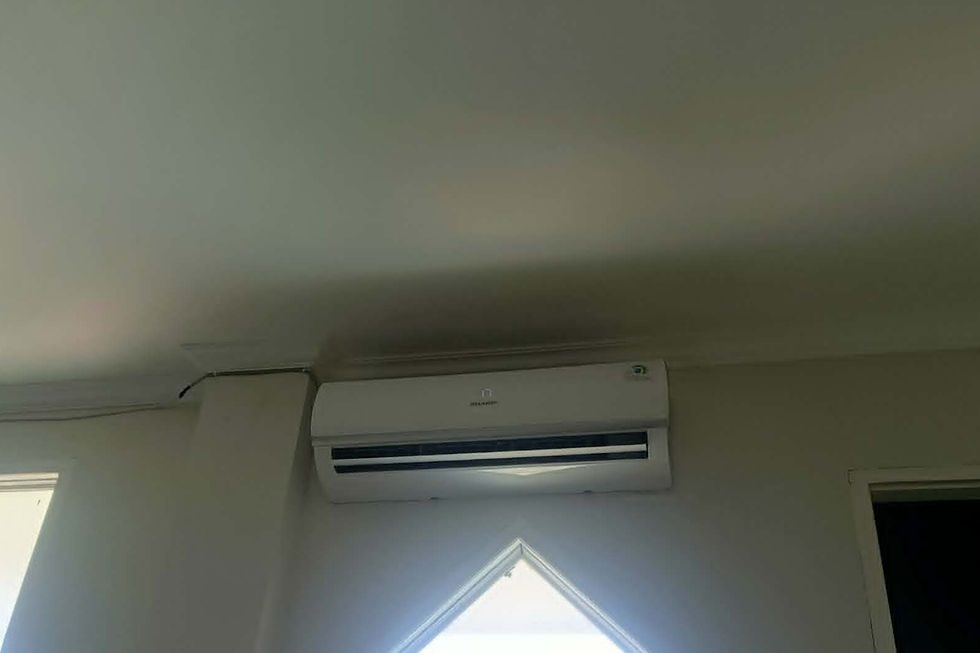
When it comes to its facilities, Lazuardi Ibnu Sina has air-conditioned classrooms, elementary and high school art rooms, a music and dance room, a field, a prayer room called Musholla, a lounge room, comfort rooms, canteen, and a playground. If you visit the school, you will also see a principal’s room, a resource room, and an office for teachers and therapists.


Although there is no library, overall, the school provides a safe, adaptive, clean, and comfortable teaching and learning environment through the availability of CCTV cameras, first aid kits, and student lockers, as well as wireless internet connection, and air conditioners.


Academic Support System
As I shared, the school does not offer library services. Luckily, it is quite near to the Kendari Modern Library, found in front of the school, which students and teachers may visit in their free time to access supplementary print resources. There are also book sections in some facilities that learners could access, such as classrooms. Additionally, the school offers free internet connection for all, which they may use for researching, teaching, and studying purposes.

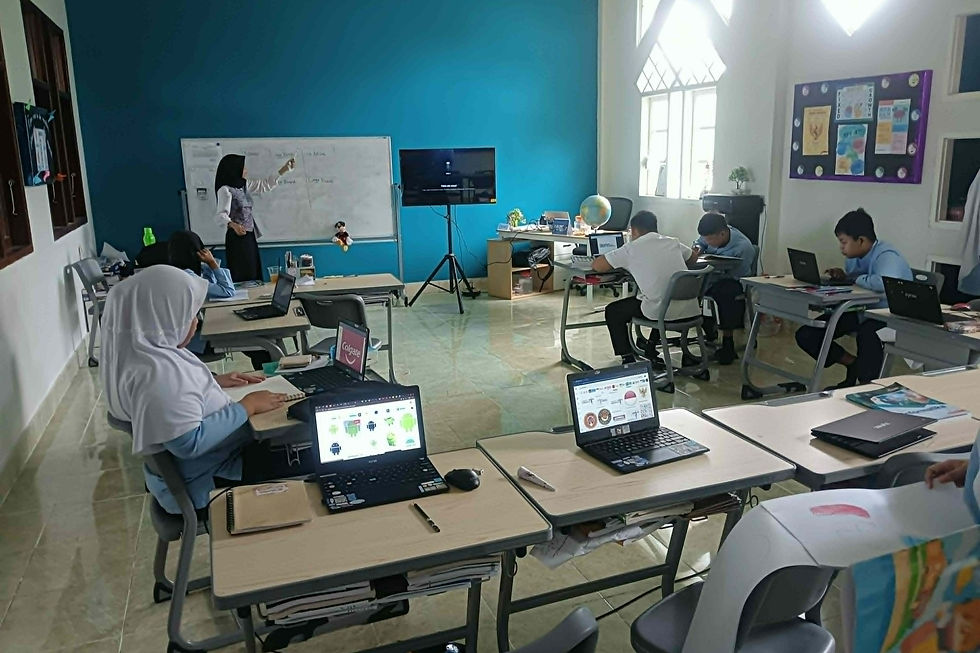
I am also impressed with the fact that the school does not only provide flat-screen televisions and interactive SMART boards for teaching but also laptops for its students. Each student normally uses them for researching, studying, making digital outputs, and even submitting academic activities right inside the classroom. They can also bring these laptops at home. That’s definitely a fun experience for these students!
When it comes to guidance and counseling services, each class has a homeroom teacher that serves as students’ guidance counselors. In fact, I observed that in Grade 7, they conduct a counseling session every Friday, where students share their learning and personal challenges and where the homeroom teacher gives advice to help them cope with those challenges. These students are also encouraged to share any personal or learning improvements they have made to the class, which the teacher and students recognize and celebrate afterwards.
To give you a concrete example, one student once shared her improved handwriting, which was warmly applauded by the homeroom teacher and her classmates. Undoubtedly, this is such a great way of taking care of learners’ well-being, while teaching them problem-solving skills and encouraging personal growth and confidence.
Another amazing experience was discovering classes that have therapists. These therapists support learners facing academic, behavioral, and developmental challenges while learning and provide their essential educational needs and care. This is truly one of the school’s academic support services that really impressed me. They have therapists assisting learners needing guidance or struggling to focus and catch up, which promotes recognition of individual learning needs and application of a learner-centered teaching approach.

What’s more, the school provides remedial sessions exclusively for kindergarten and elementary students performing poorly in academics, particularly in reading and arithmetic, through the Multi-Tiered System of Supports (MTSS). According to the junior high school vice principal, Teacher Perdi, the time and place of the sessions are flexible depending on the availability of the students and teachers when inside the school.
Although Lazuardi Ibnu Sina Kendari has no student organizations, it still creates academic learning opportunities for the students outside the classroom. In fact, we were able to attend and witness the SMART Day Competition held in their school with a theme “Small Step, Big Impact.” This event included exhibits as well as academic competitions such as Lomba Puzzle and Ranking 1 (a quiz-bee competition) participated by students from the school itself and from other schools as well.

Teaching System
Earlier, I introduced the philosophy that guides Lazuardi Ibnu Sina’s teaching. Can you still recall it? If not, let me refresh your memory!
The school is transparent when it comes to its philosophy, which includes an emphasis on multiple intelligences, peer learning, hands-on activities, brain-based activities, limitless environment, and cooperative community of teachers and stakeholders. It strives to focus on improving not just the commonly emphasized type of intelligence, logical-mathematical and linguistic, but also the other types of intelligence. It also aims to promote learning through social interactions, experiential learning, and mind-engaging activities. Besides that, it practices a flexible learning environment and shows a supportive community of teachers and higher-ups.
Did I observe these practices and philosophy in school? Definitely, but their level of implementation varies per teacher. In fact, I observed a lot of teaching methods from the various Grade 7 teachers, such as the following:
Mathematics teacher: Lecture-based instruction with guided questioning and step-by-step problem solving
Arts Teacher: Teacher-centered instruction with hands-on output
English Teacher: Interactive and student-centered instruction using questioning, games, and performance tasks
Computer Teacher: Demonstration-based instruction with guided hands-on practice
Physical Education Teacher: Activity-based and experiential learning
Entrepreneurship Teacher: Project-based, performance-based, and collaborative learning
With that, I believe the most appropriate way to describe Lazuardi Ibnu Sina Kendari’s teaching system is context-responsive with varied teaching approaches among teachers.
The school also strongly supports inclusive education, accepting learners with special needs and exceptionalities. The presence of professional therapists inside the class, alongside with the teacher, helps address these students’ varying learning needs and challenges, as well as improve their learning and behavioral development.
A combination of Cambridge Curriculum, an internationally recognized educational framework, and Merdeka Curriculum, the national Indonesian curriculum, is used in Lazuardi Ibnu Sina Kendari. Additionally, English and Bahasa Indonesia are used in teaching English, Mathematics, and Science, although the textbooks are in English. Meanwhile, Bahasa Indonesia is the medium of instruction used for other subjects.
Also, the students do not only receive numerical grades but also qualitative feedback from their teachers in various subjects about their performance, learning challenges, and progress. Additionally, the school assesses and develops learners holistically. They do not just evaluate students’ academic performance and progress but also their overall well-being and development across various dimensions:
Spiritual Health
Islamic Awareness
Positive Character Traits
Thinking, Research, and Academic Abilities
Arts Proficiency
Range of Interests, Talents, and Dispositions
Physical Fitness
Others
Just like in schools in the Philippines, the teachers, students, and school leaders at Lazuardi Ibnu Sina Kendari attend flag ceremony every Monday morning at around 7 AM. This is an essential weekly activity to show and promote patriotism in their community.

Another surprising yet amazing part of the school’s culture is its participation in their government’s national program, popularly known as MBG (Makan Bergizi Gratis) or Free Nutritious Meals. This program aims to fight malnutrition among learners and improve their physical and overall health. What’s interesting about MBG in Lazuardi is that it is not only the students who benefit from this nutritional initiative. The teachers are beneficiaries because they also receive the exact same meals. That is why, I have already tried MBG a handful of times.

It was one of my most exciting experiences in Lazuardi. I can say that those free meals were helpful, especially during times when I went to school without having breakfast. I think that my co-SEA teachers who also tried MBG for some time would definitely agree with me.
Did you know that the nutritious meals prepared every day are different? The food trays used for MBG come with lids, adding a fun element of surprise to every meal. In my experience, they serve balanced and nutritious foods, including rice, protein-rich viands, vegetables, and fruits.
One highlight of their school culture and practices is the celebration of SMART Day Competition, which is an event or competition organized annually for students to showcase their creative skills and performing talents in various areas, ranging from academic to non-academic activities. From what I witnessed, this activity is participated in not only by pre-kindergarten, kindergarten, elementary, and high school students but also by their teachers and essential stakeholders. Take note that this is not a school-wide activity, as other students and teachers within Kendari also participate to showcase and celebrate their skills and talents in arts, fashion, singing, and dancing. They also join, of course, to win!

Speaking of winning competitions, another competition under the SMART Day is the exhibit contest. Each class prepares an exhibit, displaying fun, creative, and interactive instructional materials and models, which shows students’ and teachers' creative thinking and talents.


I also noticed their commitment to instilling religious activities and practices among learners as Muslims. Every day, they pray together around 12 PM inside their prayer room, the Musholla. They also usually have prayers before and after each class. Aside from that, students also read and memorize the Qur'an inside the school. Teachers, students, and visitors also take off their shoes whenever they enter their classrooms and prayer room.

Besides that, the female students, teachers, therapists, and even principals cover their hair with hijab, which is commonly practiced by Muslim women, highlighting their religious faith and social and cultural expression. Their uniforms were also designed to hide their body shapes as a form of modesty. Overall, those religious practices and clothing were part of their culture that I found meaningful and interesting.
Finally, I also noticed their school community’s close relationships. I saw kindergarten, elementary, and high school students interacting with each other. The teachers and school leaders are also approachable and friendly with the learners. It is, indeed, evident that they value good relationships and promote a comfortable learning environment.

Overall, the school and its people radiate positivity, hospitality, courtesy, and camaraderie. I will never forget Lazuardians’ contagious smiles, sincere interest, and genuine warmth. I will always remember the teachers’ friendliness and how the students welcomed us through sweet gestures of gently placing our right hand on their cheeks, kissing it, or pressing it to their forehead—which is quite similar to Filipinos’ pagmamano—paired with happy and exciting energy. That precious moment immediately made my heart melt.
Indeed, the first time I stepped into this place, I felt welcomed, at home, and safe.


Comments